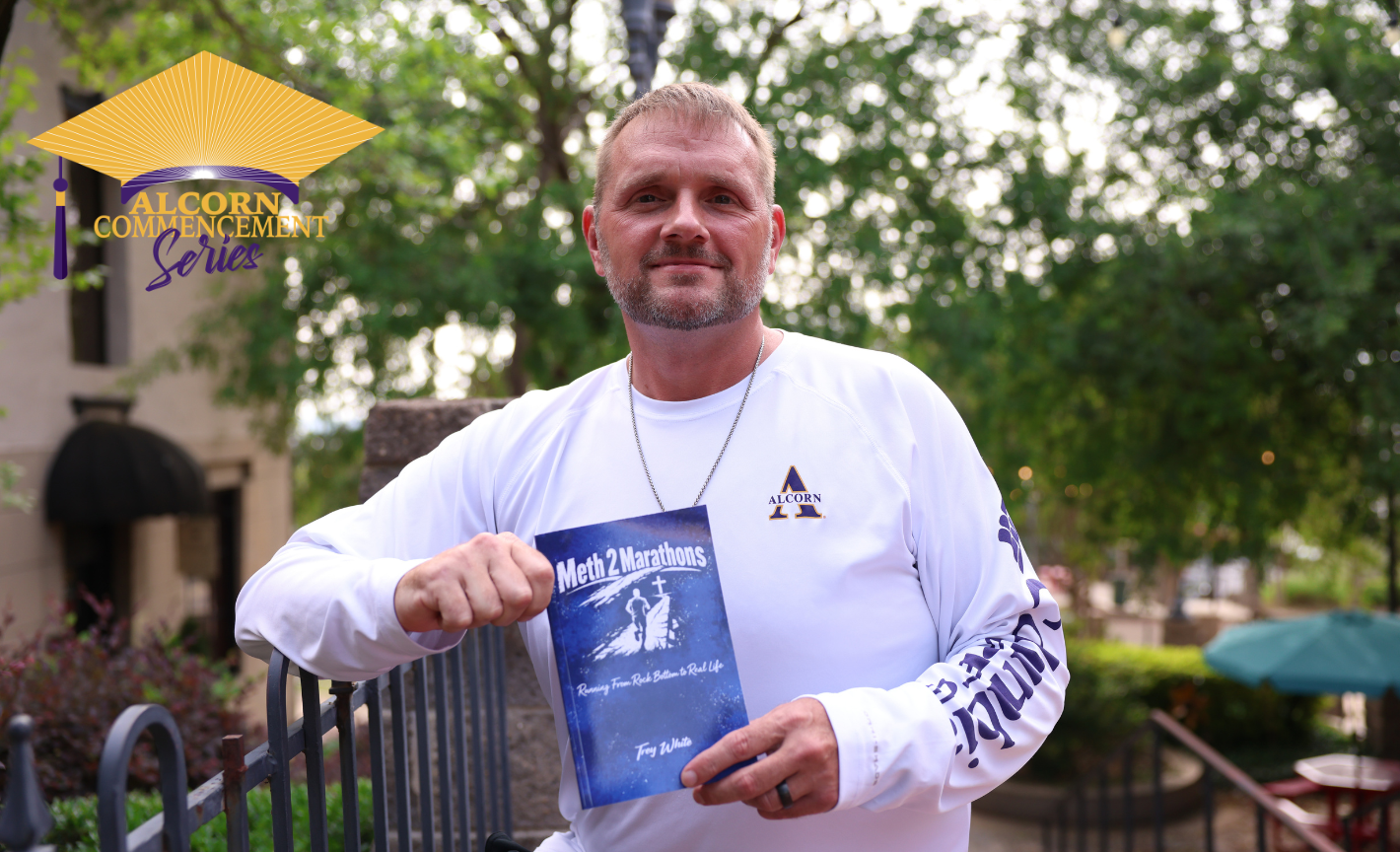
John White has a name for the voice. He heard it for years, in dark rooms, in bad decisions, in the long stretches of time he would rather forget. He heard it again on the back half of the Houston Marathon in January, legs burning, miles still ahead.
Quit, it said. Stop. It would be easier.
He kept running.
“If I could push past that voice telling me to quit on a run,” he said, “I could push past the voice telling me to get high. It’s the same fight. Just a different battlefield.”
On May 9, White will walk across the stage at Alcorn State University and receive his Bachelor of Arts degree in General Studies. He will do it with a 3.17 grade point average (GPA), an acceptance letter to Jackson State University’s School of Social Work Graduate Program, a book on Amazon, and a job at Mississippi State Hospital, where he now helps others find the same footing he once could not find himself.
John “Trey” White turned his journey through addiction and recovery into a published book, Meth 2 Marathons: Running From Rock Bottom to Real Life. The Alcorn State University graduating senior will walk across the commencement stage on May 9.
He is from Vicksburg, Miss. Most people who know him call him Trey.
The road here was not straight. White will tell you that plainly, without drama, the way a man tells you about terrain he has already crossed.
He battled addiction. He was incarcerated. He attempted school more than once and walked away, or was pulled away, each time. There were semesters he did not withdraw from classes during the worst of his addiction. The failing grades stayed on his transcript long after he got clean, a paper record of his lowest years following him into his attempt at a new one.
“My academic record didn’t reflect who I knew I could become,” he said.
The turning point came in a prison cell.
“For the first time in my life, I sat there and had no one to blame,” he said. “I had always been able to point the finger at somebody or something. That last time, I ran out of excuses.”
What followed was not a feeling. It was a reckoning.
“I realized for the first time that I was the problem. Not just saying it, not empty words, but in my heart, I accepted that I was the one creating my own misery. And everything changed in that moment.”
He went back to Alcorn. He retook classes. He stayed on a routine and showed up even when he did not want to.
“I had to learn discipline,” he said. “Not motivation — discipline.”
Slowly, the GPA climbed. The transcript began to tell a different story. He leaned on people who believed in him when he could not locate that belief himself, and he kept one thought close on the hard days.
“I didn’t want to go backwards,” he said. “That kept me moving forward.”
The 3.17 GPA he finishes with is not just a number to him. It is evidence. It is the sum of every class retaken, every early morning, every decision to stay the course.
“You don’t fix years of damage overnight,” he said. “You stay consistent. You keep going. Even when it feels slow.”
While still a student, White wrote a book. It is titled Meth 2 Marathons and it is available on Amazon. The title is not metaphor for its own sake. He ran the Houston Marathon in January 2026. Those 26.2 miles that taught him something about the nature of endurance that he had not been able to articulate before.
“The marathon is life,” he said. “It’s the long road. It’s showing up every day, even when it hurts. It’s about endurance, not speed. Recovery is the same way. You don’t fix everything overnight. You just keep going.”
He already knew that. The marathon just made it concrete.
White now works at Mississippi State Hospital and serves as a Peer Support Facilitator with the Mississippi Association of Peer Support Specialists. When he sits across from someone still in the middle of their struggle, he does not arrive with a clipboard and a clinical distance.
“I show up real,” he said. “I’ve been where they are. I understand what it feels like to be stuck. So I meet people where they are, not where I think they should be.”
He chose to make his story public at a time when many people in recovery choose privacy. It has cost him something.
“Some people only see my past,” he said.
But the other side of that ledger, he said, is bigger.
“Guilt and shame kept me in a dark place for years,” he said. “Once I finally faced my problems, I stopped letting that shame and guilt hold me back. I accept my past now, and it doesn’t carry that same weight anymore. I’ve forgiven myself.”
In the fall, White will begin graduate study at Jackson State University, working toward his goal of becoming a drug and alcohol counselor. He changed his major from psychology to general studies once he understood that a master’s degree was the path forward.
He has a message for anyone sitting in the back of a Commencement audience, in the place he once occupied.
“Your past doesn’t disqualify you,” he said. “It can actually prepare you. Don’t give up on yourself. Even when you’ve messed up. Even when it feels too far gone. It’s not. If I can turn my life around, you can too.”
John White will receive his Bachelor of Arts degree General Studies at Alcorn State University’s Spring 2026 Commencement on May 9. His book, Meth 2 Marathons, is available on Amazon.
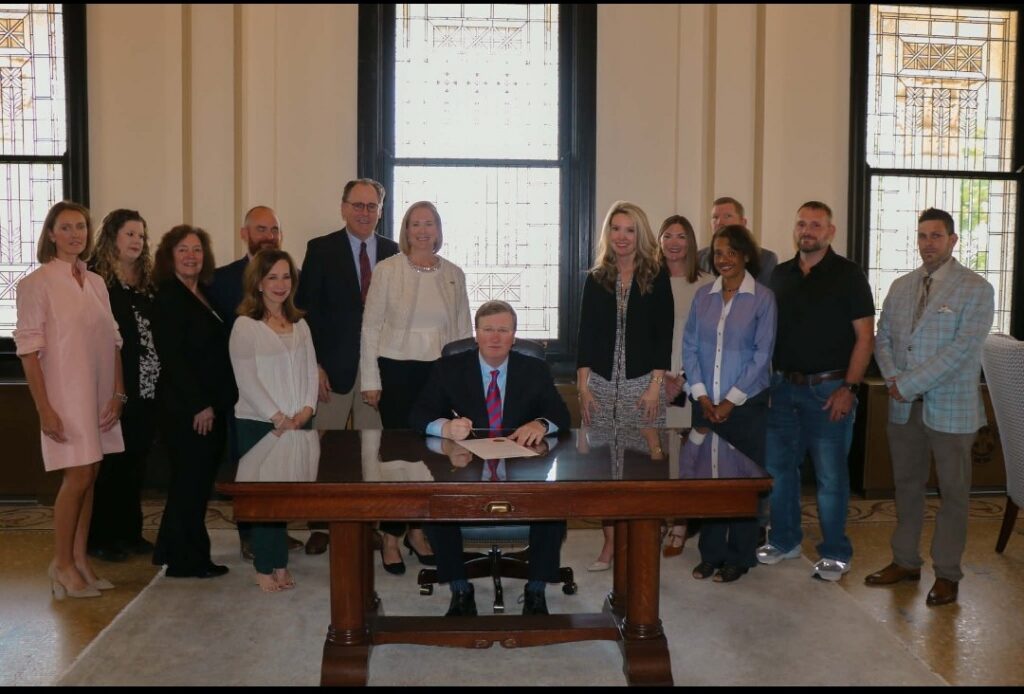
John White, second from right, turned his personal journey through addiction and recovery into public advocacy — joining Mississippi Governor Tate Reeves and fellow advocates for the signing of the Overdose Awareness Bill.