
LORMAN, Miss. – The Future Farmer Project (TFFP) is a USDA-funded initiative led by Ponix that promotes agricultural technology adoption, sustainable food production and farmer education through hydroponic systems. Hydroponic systems grow crops in nutrient-rich water instead of soil. The USDA funds the project through Ponix under its Advancing Markets for Producers program.
The $213,000 project began Sept. 1 and runs through March 2027.
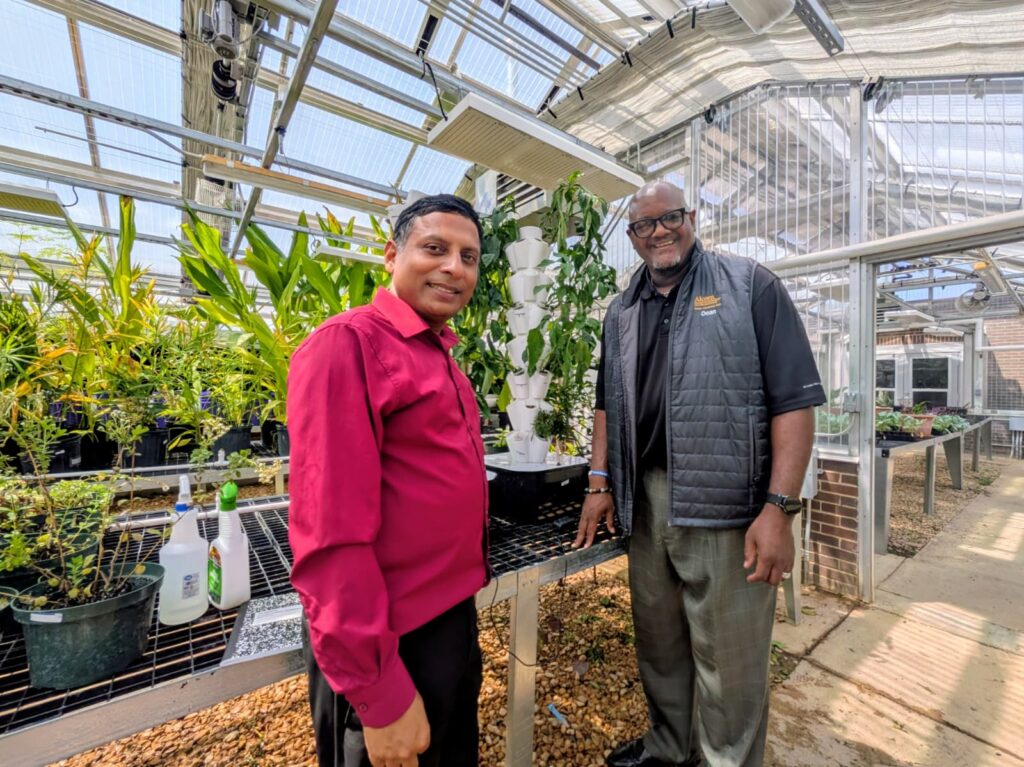
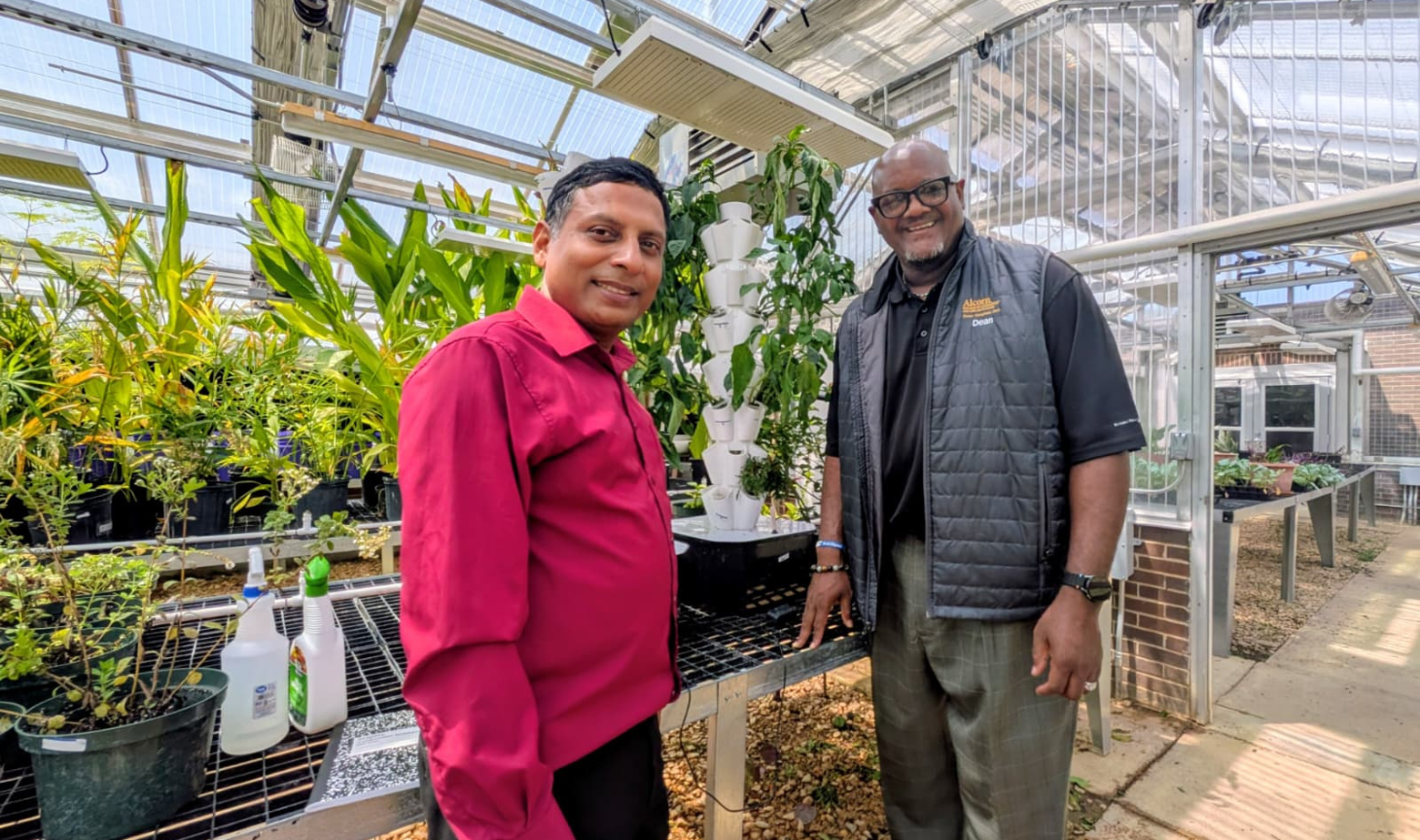
Dr. Emran Ali, left, and Dr. Dexter Wakefield in the greenhouse at Alcorn State University.
Dr. Emran Ali, associate professor and Extension horticulture specialist, and Dr. Dexter Wakefield, dean of the College of Agriculture and Applied Sciences, are co-investigators.
Alcorn State will build a hydroponic demonstration system in its greenhouse facilities. Procurement is underway, and installation is expected to begin around mid-November. Lettuce will be the first crop, with the first harvest expected 30 to 45 days after transplanting. The system will support research, teaching and Extension outreach on controlled environment agriculture, sustainable crop production and resource-use efficiency.
Ponix coordinates TFFP. Alcorn State is responsible for establishing the system and conducting research, student training, farmer education and Extension outreach in Mississippi.
“As a land-grant institution, the College of Agriculture and Applied Sciences is committed to developing innovative solutions that strengthen agricultural sustainability, enhance food security and create educational opportunities for students and producers,” said Wakefield.
Through farmer workshops, field demonstrations and technical assistance, Alcorn State expects to reach 75 to 100 farmers and community members a year, with an emphasis on limited-resource, minority and beginning farmers. Workshops will cover home hydroponics, seed germination, seedling production and crop management, including how to obtain seeds and seedlings from commercial suppliers and local nurseries. The project will also promote local vegetable production and raise awareness of ways to improve access to fresh produce and community food security.
“This project will allow us to expand hydroponic agriculture training and demonstrate the potential of advanced production technologies for communities across Mississippi,” said Ali.
Researchers will work to improve crop productivity, water and nutrient-use efficiency and profitability while evaluating smart hydroponic technologies. The project also aims to provide practical, affordable production solutions for Mississippi’s small farmers.
Undergraduate and graduate students will gain hands-on experience with hydroponic production and controlled environment agriculture. The system will also be used in academic and workforce-development activities.
Hydroponic farming grows plants without soil. The roots sit in water that contains dissolved nutrients, or in a material such as perlite or coconut coir that holds the solution. Growers control the nutrients, light and temperature, often in a greenhouse. Because the water is recirculated, hydroponic systems typically use less water than field production, and they allow crops to be grown year-round.
For more information, contact Ali at 601-877-6129 or [email protected].