The future of biology may be written in code. Alcorn State University students are already learning the language.
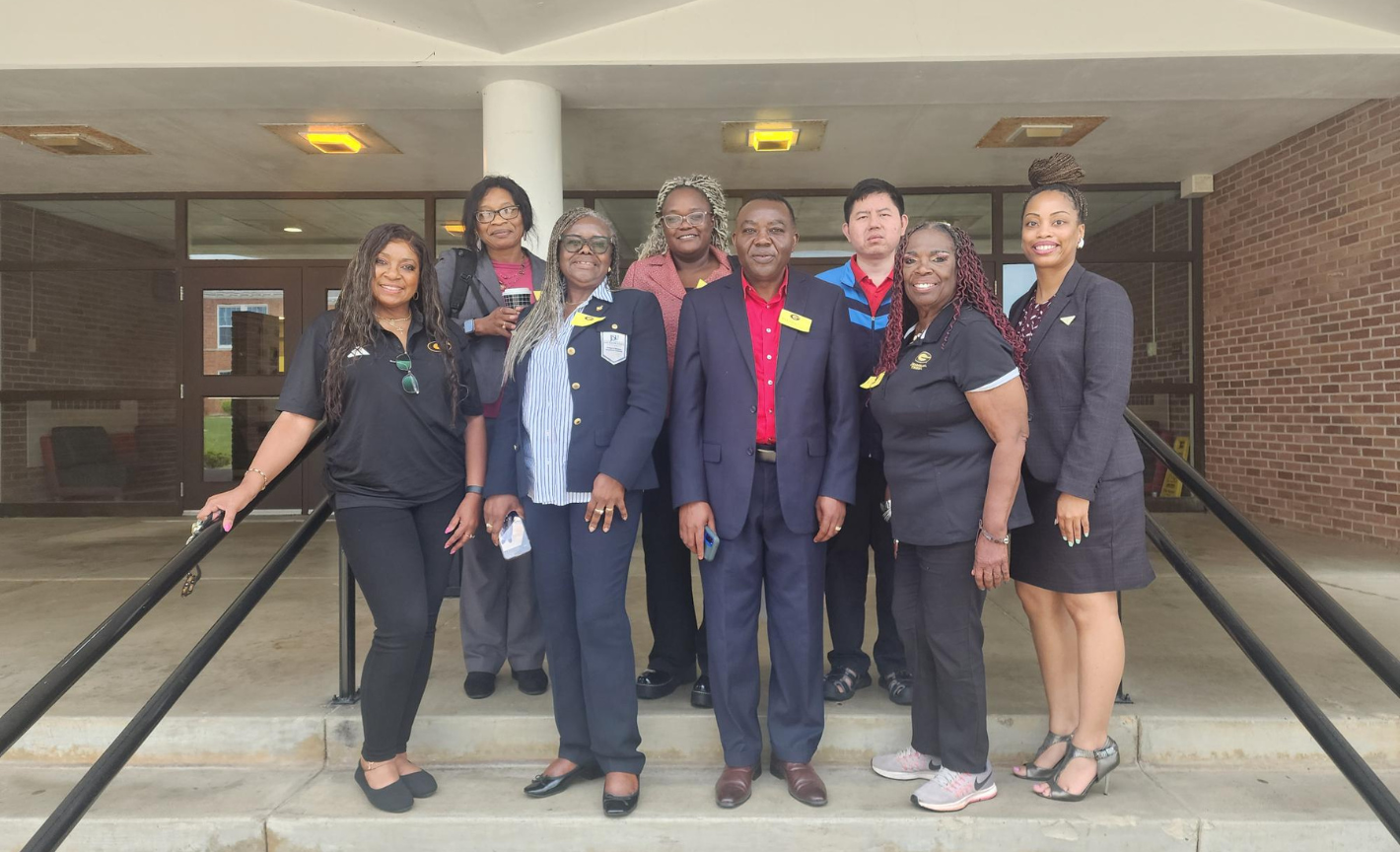
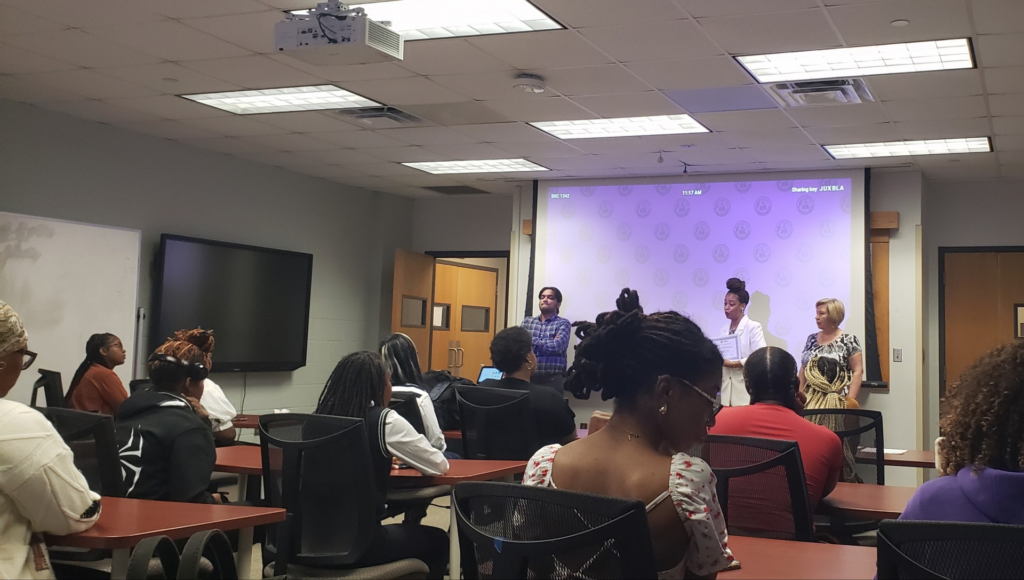
A delegation of 37 students and three faculty members from the university’s Department of Biological Sciences presented research April 24 at the Second Undergraduate Research Symposium on AI and Machine Learning in Biology at Grambling State University.
The students delivered oral presentations on their work.
Their mentors, Dr. Jameka Grigsby, associate professor of biology and the project’s principal investigator; Dr. Elena Kostyleva, assistant professor; and Dr. Debarshi Roy, associate professor, also took the stage as featured speakers, sharing what they have learned about where artificial intelligence (AI) meets biological research.
“The Research Symposium aims to showcase innovative ideas, emerging advancements, and effective implementation strategies for integrating Artificial Intelligence (AI) and Machine Learning (ML) into the biology curriculum,” said Grigsby. “The event brought together data scientists, biology faculty, education experts, and STEM students from four Historically Black Colleges and Universities (HBCUs)—Alcorn State University, Florida A&M University, Grambling State University, and Jackson State University, along with Stephen F. Austin State University as a key networking partner, to foster interdisciplinary collaboration at the intersection of biological data science, ar
tificial intelligence (AI), and machine learning (ML) systems.”
The symposium had a clear purpose showing how AI and machine learning (ML) can move from concept to classroom.
The aim was collaboration across disciplines that rarely share a room — biological data science, AI and machine learning.
“This research Symposium was sponsored by the National Science Foundation, NSF/RCN-UBE Program, Award #2417643, to Alcorn State University, Florida A&M University, lead institution; Grambling State University, and Jackson State University,” said Grigsby.
During the 2025-26 academic year, the five institutions folded a genetics module powered by AI and machine learning into their biology curricula. It is already changing how students analyze, interpret and apply biological data.
High-throughput technologies now generate enormous genomic datasets — DNA sequences, gene expression profiles, epigenetic modifications — far more than any researcher could sort by hand.
AI and machine learning make those data manageable. The tools surface hidden patterns and flag genetic variants tied to disease, traits and environmental response.