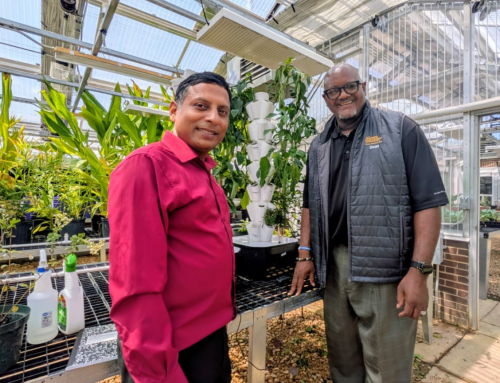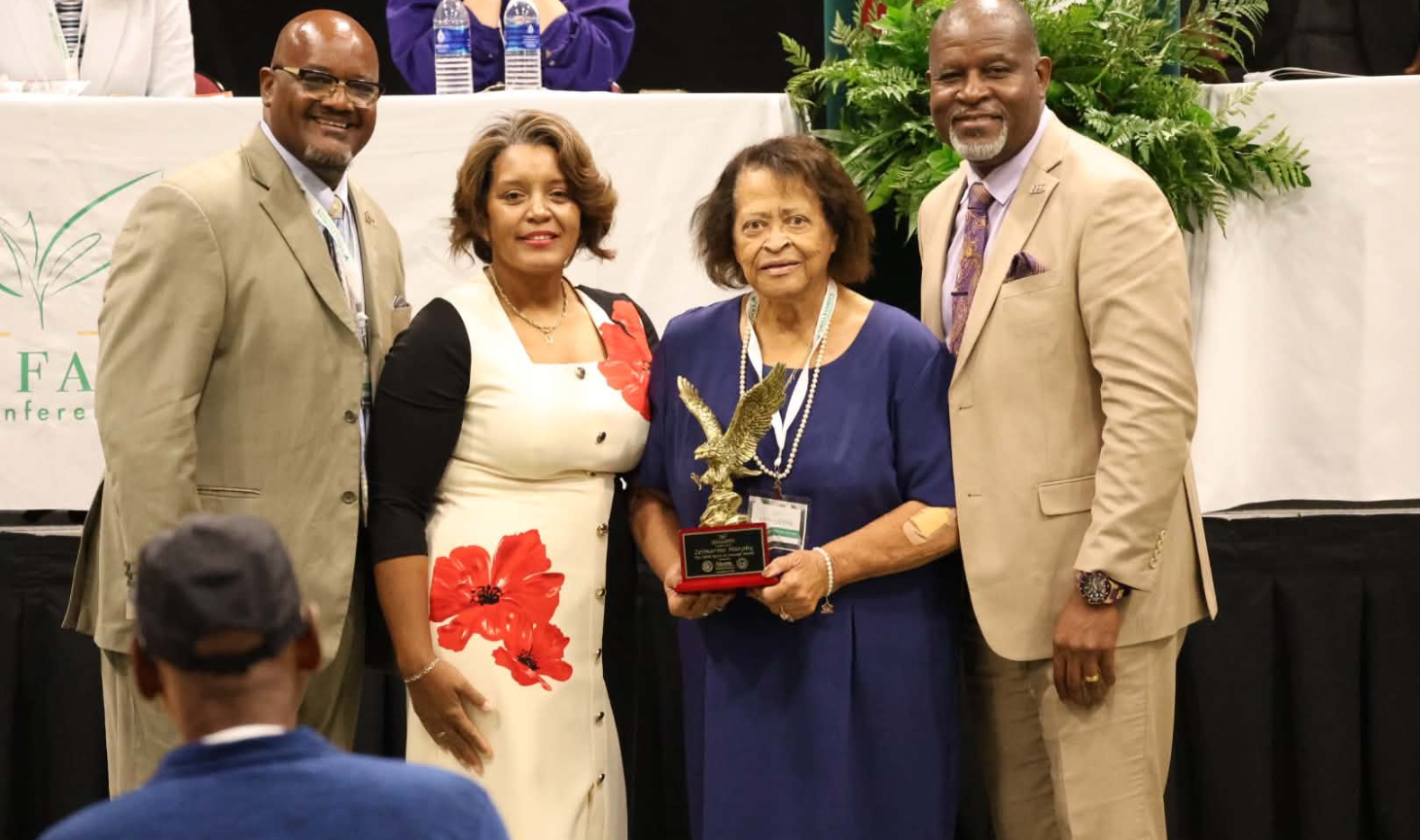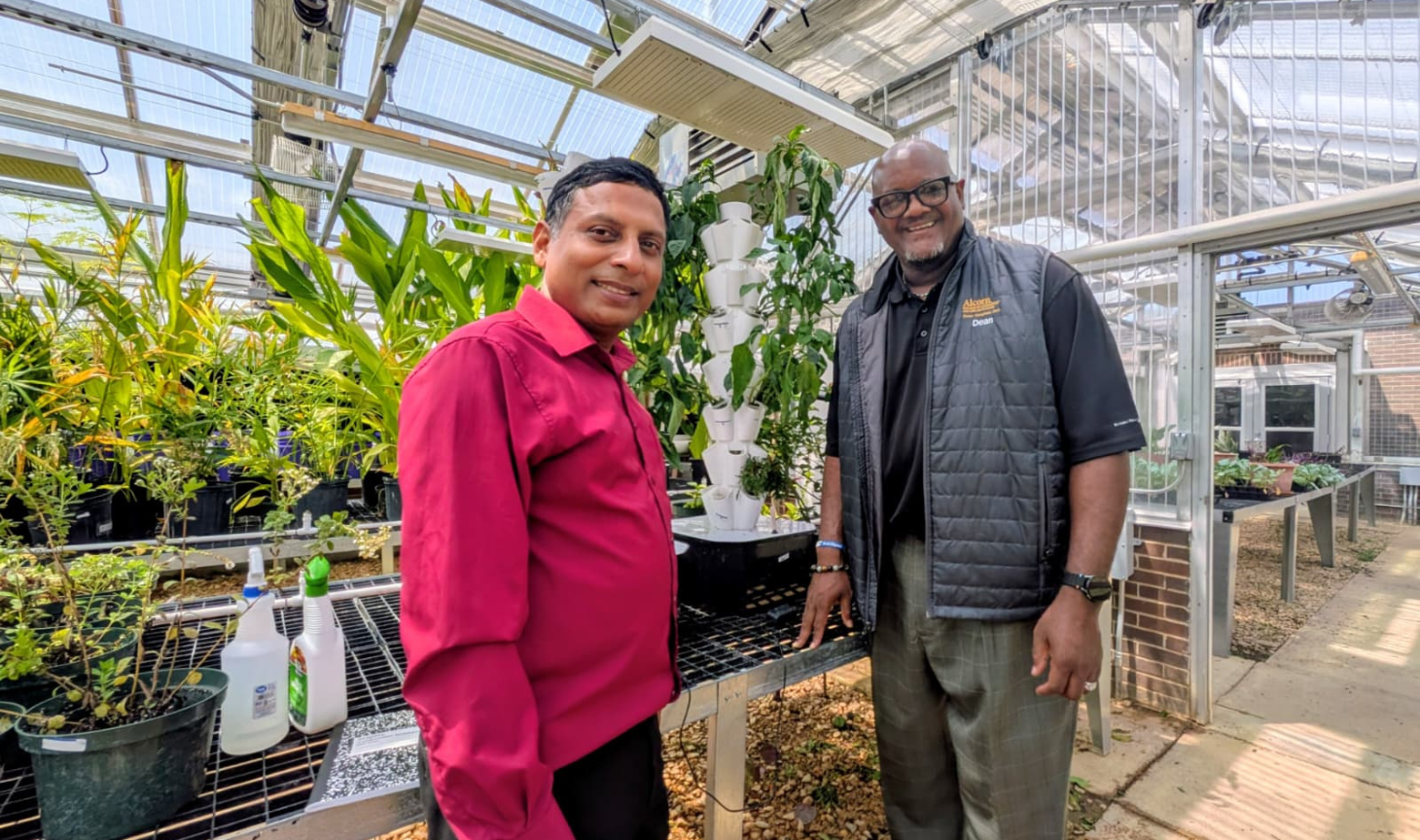

Dexter B. Wakefield, Ph.D., dean of the College of Agriculture and Applied Sciences and director of Land Grant Programs at Alcorn State University, has been selected as a Fellow of the Food Systems Leadership Institute.
He joins the institute’s 22nd cohort, a national group of leaders from higher education, government, industry and the nonprofit sector. The program runs two years.
Wakefield was nominated by Alton Thompson, executive director of the Association of 1890 Research Directors.
“Being selected by Dr. Alton Thompson is both a tremendous honor and a significant vote of confidence in my leadership potential,” Wakefield said. “This opportunity will allow me to continue to grow and develop as a leader and reinforce core competencies to handle challenges and opportunities for the future. Dr. Thompson is well recognized and respected in this profession and a vote of confidence from him is taken with pride and humility.”
The Food Systems Leadership Institute develops senior leaders who work across food and agriculture. Fellows complete three week-long residential sessions, one-on-one coaching, mentoring, an individual leadership project and a personal development plan, along with distance learning between sessions. Each fellow also undergoes a 360-degree assessment and other research-based evaluations meant to sharpen self-awareness and performance.
The residencies rotate among three partner universities. The cohort meets first at North Carolina State University in Raleigh, N.C., on Oct. 11-15, 2026. It reconvenes at The Ohio State University in Columbus, Ohio, on Feb. 14-18, 2027, and closes at California Polytechnic State University in San Luis Obispo, Calif., on June 7-11, 2027.
Wakefield has taught agricultural education since 1990. He is chair-elect of the 1890 Council of Deans and serves on the boards of the National Council for Agricultural Education and the Mississippi Land, Water and Timber Commission.
He framed the fellowship as preparation for change — at his college and beyond.
“I see agriculture evolving into a more technology-driven, data-informed and sustainability-focused enterprise that must also remain deeply connected to people and communities,” he said.
He traces that outlook to his years in FFA, and to a creed he recited as a boy that still shapes his work. The past, he said, is what fuels what comes next. “Struggles of former years create innovation,” he said.
Wakefield said he intends to use the training to expand interdisciplinary research, strengthen Extension programming, increase external funding and build new academic programs. The through line, he said, is students.
“We must prepare the next generation of leaders to create opportunities that improve and strengthen our communities and sustain our natural resources while creating pathways for future generations,” he said.