
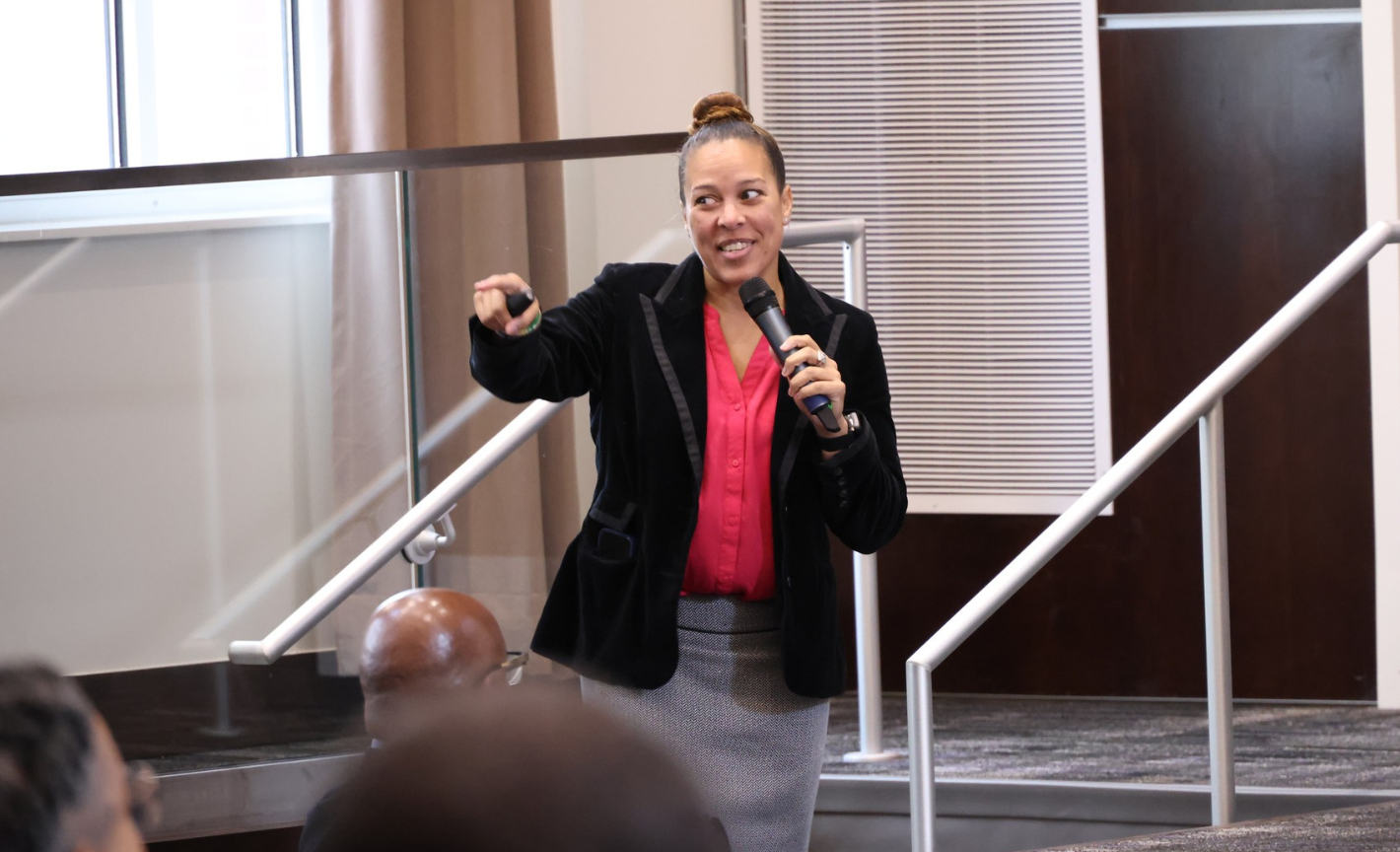
Alcorn State University faculty and staff gathered on Nov. 19 for a workshop focused on securing federal research dollars and leveraging the collective power of Historically Black Colleges and Universities (HBCUs).
The session featured Dr. Erin Lynch, president of the Quality Education for Minorities (QEM) Network, and Dr. Felicia Nave, president and CEO of the 1890 Universities Foundation and former president of Alcorn State.
Dr. Dexter B. Wakefield, dean of the College of Agriculture and Applied Sciences, opened the session by emphasizing the goal of helping faculty make strategic decisions regarding their research and career pathways.
Nave highlighted the mission of the 1890 Universities Foundation, which advocates for the 19 historically Black land-grant universities. She emphasized the concept of “19 Strong,” leveraging the collective voice of these institutions to mobilize resources and facilitate high-impact programs.
“We call it 19 Strong because we’re looking at the impact of the entire community and how that can be leveraged in order to truly support the innovative research and efforts that you have going on your campuses,” said Nave. “We work to build capacities for our universities and the communities that they serve.”
She outlined initiatives to support these campuses, including collaborative efforts to address artificial intelligence and veterinary medicine education.
Lynch provided a comprehensive roadmap to the National Science Foundation (NSF), the leading federal agency for STEM education funding. She challenged attendees to be proactive, revealing that a significant portion of funding comes from ideas pitched directly to program officers rather than waiting for formal competitions.
“A phone call could help you get some funding, because someone might believe in the power of your work, even if there’s no competition that directly lies with it,” said Lynch.
Lynch detailed specific administrative priorities where Alcorn State researchers could find funding success, including energy dominance, strengthening American security, and safeguarding health. The presentation underscored the vital role HBCUs play in the national ecosystem, with Lynch encouraging faculty to lean into their identity in their proposals.
“We are no longer in the work of innovation in equity, we’re in the work of parity promotion,” said Lynch.